Table of Contents
If you are working in New York’s alcohol service industry or preparing to one question comes up early in the process: do you need an on-premise certification, an off-premise certification, or both? It is a more important distinction than it might first appear. Getting the wrong type of certification does not just waste your time and money; it can leave you out of compliance with your employer’s requirements or your liability insurance carrier’s expectations.
This guide explains exactly what on-premise and off-premise alcohol certification means in New York, who needs each type, how the environments differ, and how to choose the right course for your role. If you are a bartender, server, store clerk, delivery driver, or business owner, this is the information you need before you enroll.
What New York ATAP Certification Actually Covers
Before diving into the on-premise versus off-premise distinction, it helps to understand the certification framework that governs both. In New York, the state-approved training standard is called ATAP the Alcohol Training Awareness Program overseen by the New York State Liquor Authority (NYSLA).
An ATAP certification is the recognized credential for anyone who sells, serves, or handles alcohol in New York. It demonstrates that you understand state liquor laws, responsible service practices, liability exposure, and the specific rules that govern how alcohol is sold or served in your type of establishment.
Within the ATAP framework, the core distinction is between two types of environments: on-premise and off-premise. Both require NYSLA-approved training, but the content, scenarios, and compliance rules for each are tailored to their very different operating contexts.
What Is New York ATAP Certification?
ATAP stands for Alcohol Training Awareness Program. It is the overarching framework established by the NYSLA to ensure that anyone selling or serving alcohol in New York is properly trained to do so responsibly. An ATAP certification regardless of which approved provider you complete it through teaches you the fundamentals of responsible alcohol service.
A quality ATAP course covers:
- How to recognize signs of intoxication in patrons
- Legal responsibilities and liability for alcohol servers and establishments
- How to prevent sales of alcohol to minors
- New York State liquor laws, regulations, and penalties
- Techniques for safely refusing service
- Best practices for on-premise and off-premise alcohol environments
Upon successful completion, you receive an ATAP certificate that is valid for three years and recognized statewide. Most employers bars, restaurants, hotels, event venues, nightclubs, retail liquor stores, and delivery services will accept any NYSLA-approved ATAP certificate as proof of compliance.
On-Premise Certification: What It Is and Who Needs It
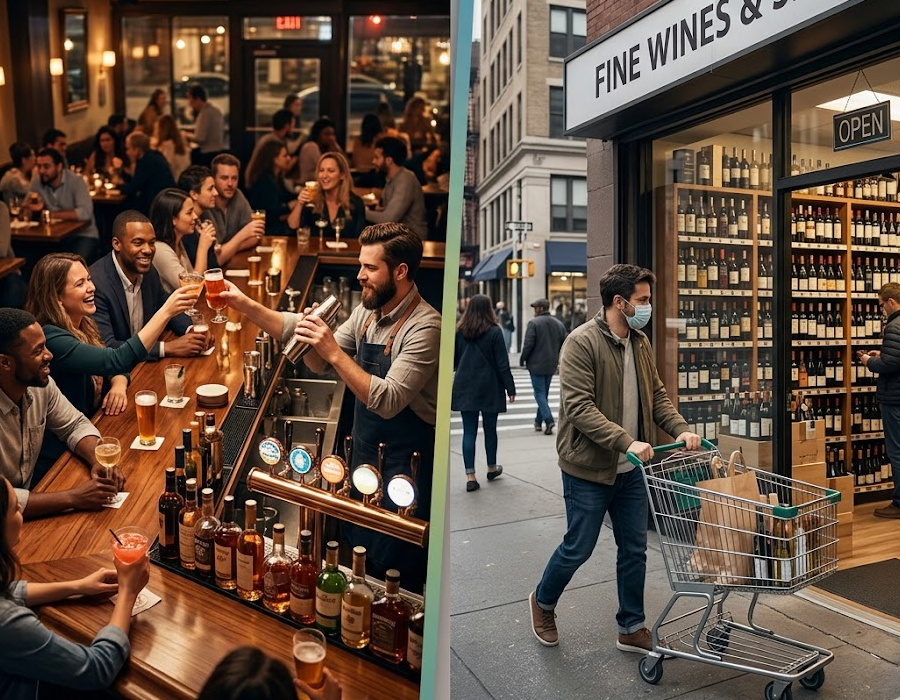
On-premise refers to any licensed location where alcohol is purchased and consumed on-site. The customer buys the drink and drinks it there, in the establishment. This is the world of bars, restaurants, nightclubs, hotels, event spaces, stadiums, breweries with taprooms, and similar venues.
If you work in any of the following roles, on-premise certification is what you need:
- Bartenders and bar staff at any licensed establishment
- Restaurant servers who take drink orders or deliver alcoholic beverages
- Hotel bar and lounge staff
- Nightclub and event venue staff
- Security personnel at bars or nightclubs
- Managers and supervisors overseeing alcohol service on-site
- Brewery, winery, and distillery tasting room staff
- Catering staff serving alcohol at events
The on-premise environment carries a distinct set of challenges. Servers and bartenders interact directly with patrons in real time, often in high-volume, high-pressure settings. They must recognize and respond to signs of intoxication while managing service across multiple customers simultaneously. They bear direct responsibility for the decisions they make at the point of sale and under New York’s dram shop laws, those decisions carry serious legal consequences.
On-premise ATAP training through Serving Alcohol Inc. prepares workers for exactly these situations. It covers how to identify intoxicated or underage patrons, how to refuse service without escalating conflict, how to document incidents, and how to understand your personal liability exposure as a server or employee.
New York Dram Shop Law On-Premise Liability
Under New York State law, a licensed establishment that serves alcohol to a visibly intoxicated person or to a minor may be held civilly liable for damages that result from that person’s subsequent actions. This liability extends to the employee who served the alcohol, not just the business owner. On-premise certification is a recognized demonstration of good-faith compliance.
Off-Premise Certification: What It Is and Who Needs It
Off-premise refers to licensed locations where alcohol is sold for consumption elsewhere not on-site. The customer purchases the product and takes it home, to an event, or to another location to consume it. This includes liquor stores, convenience stores, grocery stores, big-box retailers with alcohol sections, and increasingly, alcohol delivery services.
Off-premise certification is required for:
- Liquor store employees and managers
- Convenience store clerks who sell beer, wine, or spirits
- Grocery store staff in departments that sell alcohol
- Retail workers at any store with an off-premise liquor license
- Alcohol delivery drivers, including gig workers delivering for platforms like DoorDash, Uber Eats, and Grubhub
- Warehouse and distribution staff whose roles involve alcohol sales compliance
The off-premise environment presents a different kind of challenge than on-premise service. Workers are not watching a patron consume the alcohol they are completing a transaction that ends at the point of sale. The risks center on selling to minors, selling to individuals who appear intoxicated, and complying correctly with the regulations governing retail alcohol sales and delivery.
New York alcohol delivery laws have expanded significantly with the growth of third-party delivery platforms. Drivers delivering alcohol on behalf of a restaurant, grocery service, or dedicated alcohol delivery platform are now required to complete ATAP-approved training before making deliveries. This applies to gig economy workers just as it does to full-time retail staff the certification requirement does not change based on employment status.
Alcohol Delivery in New York Certification Required
New York State requires alcohol delivery drivers to hold a valid ATAP certification. This applies to drivers working for app-based platforms such as DoorDash, Uber Eats, and Grubhub, as well as drivers employed directly by retailers or restaurants. Off-premise certification from Serving Alcohol Inc. satisfies this requirement.
Key Differences Between On-Premise and Off-Premise Environments
Understanding the structural differences between these two licensing categories helps clarify why separate certifications exist and why the training content differs between them.
|
Factor |
On-Premise |
Off-Premise |
|
Where alcohol is consumed |
At the licensed establishment |
Away from the point of sale |
|
Examples |
Bars, restaurants, nightclubs, hotels, event venues |
Liquor stores, grocery stores, convenience stores, delivery drivers |
|
Service interaction |
Direct, ongoing, real-time |
Single transaction at point of sale |
|
Primary compliance risk |
Over-service, intoxicated patrons, conflict |
Sales to minors, ID verification, delivery compliance |
|
Dram shop liability |
High — ongoing service decisions |
Lower but still significant at point of sale |
|
NY ATAP certification |
Required (on-premise) |
Required (off-premise) |
|
Training focus |
Service refusal, intoxication recognition, crowd management |
ID verification, delivery laws, retail compliance |
|
Certification via Serving Alcohol |
$12.50 covers on-premise |
$12.50 covers off-premise |
The Legal Framework: Why Both Types of Certification Matter
New York’s alcohol regulations are administered by the New York State Liquor Authority (NYSLA), which issues different license categories for on-premise and off-premise businesses. These are not interchangeable. An on-premise license does not permit retail bottle sales, and an off-premise license does not permit on-site consumption. The licensing categories create distinct legal environments, and the training requirements reflect that distinction.
For on-premise businesses, the central legal exposure is dram shop liability. New York’s dram shop law holds licensed establishments and their employees responsible for the consequences of over-serving. If a patron leaves a bar visibly intoxicated and causes an accident, the establishment can face significant civil liability. Servers who have completed on-premise ATAP training are better equipped to prevent these situations and to demonstrate due diligence if litigation arises.
For off-premise businesses, the compliance focus shifts to the point-of-sale transaction. Selling alcohol to a minor in a retail setting, failing to check ID correctly, or delivering alcohol to an address where the recipient is intoxicated or underage each carry their own penalties under New York law. Off-premise ATAP training addresses these specific risk scenarios with the practical guidance workers need to make correct decisions at the register or on the doorstep.
In both environments, completing a state-approved ATAP course is the recognized standard of professionalism and for liability insurance carriers across New York, it is typically a condition of coverage for any employee who handles alcohol.
Can One Certification Cover Both On-Premise and Off-Premise?
This is one of the most common questions from workers entering the industry, especially those who might work multiple jobs or transition between retail and service roles. The answer depends on your provider.
Serving Alcohol Inc.’s New York ATAP course is designed to cover both on-premise and off-premise situations within a single, comprehensive training. This means a single certification from Serving Alcohol adequately prepares you for both service environments whether you’re behind a bar tonight and working a liquor store shift on the weekend.
Some other ATAP providers, including certain TIPS course formats, separate on-premise and off-premise training into distinct products that must be purchased individually. This approach can double your certification cost without adding any regulatory benefit in New York, where both types of certificates carry equal legal standing when issued by an approved provider.
If you work in or plan to work in both on-premise and off-premise settings, confirming your provider covers both environments in a single course is one of the most practical steps you can take when choosing where to get certified.
How Employers and Insurance Carriers View the Distinction
Most New York employers in the hospitality industry understand the on-premise versus off-premise distinction and will verify that your certification matches your role. A bar hiring a bartender will expect on-premise certification. A liquor store hiring a clerk will expect off-premise certification. Providing the wrong type even if it comes from a valid ATAP provider can require you to recertify, delaying your start date and creating unnecessary friction.
Liability insurance carriers are similarly attentive. Carriers that write liquor liability policies for New York businesses frequently audit employee certification records as part of their underwriting process. They want to see that every employee in an alcohol-handling role holds the correct type of certification for that role. Gaps or mismatches in certification coverage can affect premiums or coverage eligibility.
Serving Alcohol Inc. is trusted by liability insurance carriers nationwide precisely because the on-premise and off-premise distinction is clearly embedded in the course curriculum. Employers and carriers that work with Serving Alcohol-certified staff know that the training content matches the compliance context of the role.
What the Certification Course Teaches for Each Environment
Whether you take the on-premise or off-premise track, a quality ATAP course from Serving Alcohol Inc. teaches the fundamentals of responsible alcohol service New York liquor laws, liability exposure, ID verification, and how to recognize and respond to intoxication. The difference lies in the scenarios, examples, and situational guidance that are specific to each environment.
On-Premise Training Covers:
- New York State liquor laws applicable to licensed service establishments
- How to recognize behavioral and physical signs of intoxication in real time
- Techniques for refusing service safely and de-escalating conflict
- Checking IDs and understanding acceptable forms of identification
- Dram shop liability what it means for servers and bar managers personally
- Managing high-volume service situations and patron behavior
- Documenting incidents and protecting your establishment legally
- Best practices for event and banquet alcohol service
Off-Premise Training Covers:
- New York State liquor laws applicable to retail and delivery settings
- Rigorous ID verification at the point of sale what to check and how
- Refusing sales to minors and visibly intoxicated individuals
- New York alcohol delivery laws and compliance for delivery drivers
- Age verification protocols for in-person and contactless delivery
- Liability exposure for retail clerks, managers, and delivery drivers
- Handling difficult transactions calmly and within legal boundaries
- Record-keeping and compliance best practices for retail environments
Both tracks deliver substantive, state-specific training rather than generic awareness content. The course is entirely self-paced and online, accessible on any device. Most learners complete it in approximately three hours, and the certificate is available for immediate download upon completion.
How to Choose the Right Certification for Your Role
The decision comes down to one straightforward question: where does alcohol leave the licensed premises in your role does it get consumed on-site, or does the customer take it elsewhere?
Choose On-Premise Certification if:
- You work as a bartender, server, or manager in a bar, restaurant, or club
- You serve alcohol at events, banquets, or hotel functions
- You work in a tasting room at a brewery, winery, or distillery
- You are door security at a venue with an on-premise license
- Patrons consume alcohol in your establishment during their visit
Choose Off-Premise Certification if:
- You work as a clerk or manager at a liquor store, grocery store, or convenience store
- You deliver alcohol as a driver for DoorDash, Uber Eats, Grubhub, or a retail delivery service
- You work in any retail setting where customers purchase alcohol to take home
- Your employer holds an off-premise retail liquor license
Consider Both if:
- You work in multiple roles across both service and retail environments
- You are a manager or owner overseeing both types of operations
- You want comprehensive coverage that applies regardless of where your career takes you
Get Certified Today $12.50 for New York ATAP
Serving Alcohol Inc.’s New York ATAP certification covers both on-premise and off-premise environments in a single, NYSLA-approved online course. Complete it in approximately three hours, download your certificate instantly, and stay certified for three years. Enroll at servingalcohol.com.
Stop Guessing Get the Right Certification the First Time
The on-premise versus off-premise distinction is not a technicality. It reflects fundamentally different legal environments, different service contexts, and different compliance responsibilities. Getting certified in the right category for your role means your training matches the actual risks and regulations you will face on the job.
For most New York hospitality and retail workers, the path is clear: identify whether your role is on-premise, off-premise, or both and complete the corresponding ATAP-approved training through a trusted provider. At $12.50 for a course that covers both environments, is accessible entirely online, takes roughly three hours to complete, and awards an instantly downloadable certificate valid for three years, Serving Alcohol Inc. makes that path as simple and affordable as it can be.
Whether you are a bartender in Manhattan, a liquor store clerk in Buffalo, or a delivery driver working across New York City’s boroughs, your certification should reflect where you work and what you do. Get it right from the start.
Frequently Asked Questions
Q1: Is on-premise or off-premise certification required by New York State law?
Not universally, but most employers require it as a condition of employment and liability insurance carriers require it for coverage. Some local ordinances also make ATAP certification compulsory.
Q2: What is the difference between on-premise and off-premise certification?
On-premise is for bars, restaurants, and venues where alcohol is consumed on-site. Off-premise is for retail clerks and delivery drivers who sell alcohol for consumption elsewhere. Both are NYSLA-approved ATAP certifications with curriculum tailored to each environment.
Q3: Does Serving Alcohol Inc.’s course cover both on-premise and off-premise?
Yes. A single $12.50 course from Serving Alcohol Inc. covers both environments no need to purchase two separate certifications.
Q4: Do alcohol delivery drivers in New York need off-premise certification?
Yes. New York requires ATAP certification for all alcohol delivery drivers, including gig workers on DoorDash, Uber Eats, and Grubhub. Off-premise certification from Serving Alcohol Inc. fully satisfies this requirement.
Q5: How long does it take to complete the course?
Approximately three hours. The course is 100% online, self-paced, and accessible on any device. Your certificate is available for instant download upon completion.
Get certified today at servingalcohol.com
complete the course in about three hours and download your New York ATAP certificate instantly.
🌐 servingalcohol.com/new-york-atap-alcohol-course
New York ATAP Certification — Only $12.50
Disclaimer: The information in this article is for general informational purposes only and is based on publicly available NYSLA guidance at the time of writing ( 2026). It does not constitute legal or regulatory advice. ATAP certification requirements, employer obligations, and alcohol service laws may vary by location and are subject to change. Always verify current requirements directly with the New York State Liquor Authority (sla.ny.gov) or a qualified legal professional before making any compliance-related decisions.