
Table of Contents
Which States Require Alcohol Server Training, What the 1-2-3 Rule Means, Zero-Tolerance DUI Laws, the Strictest States for Alcohol, and How California’s RBS Program Compares Nationally
If you are a server, bartender, or hospitality operator who works or is planning to work across multiple states, one of the most practically important questions in the industry is also one of the most misunderstood: does my alcohol server certification transfer from state to state, and are other states’ training requirements as strict as California’s?
The answer is more complicated than most people expect. The United States does not have a single federal alcohol server training standard. Alcohol regulation in America is a state-by-state patchwork, governed by each state’s own liquor control authority under powers reserved to states since the repeal of Prohibition in 1933 under the Twenty-First Amendment. This means that whether you need training, what kind, from whom, how often, and what happens if you skip it all of these vary significantly depending on which state you are standing in.
This guide maps the national landscape of alcohol server training requirements. It covers which states currently mandate training, which have voluntary programs, which have no law at all, how California’s RBS program compares to peer states, what the 1-2-3 rule for alcohol moderation means, how DUI laws vary across states, which states are strictest about alcohol, and what the data shows about where Americans drink most. It is built as a reference resource for servers, bartenders, multi-state employers, and hospitality professionals who need to understand the full national picture, not just the rules in one state.
National RBS & Alcohol Server Training Snapshot (2026)
Federal Standard: None alcohol regulation is state-controlled under the 21st Amendment | States with Mandatory Statewide Training: Approximately 14–17 states | States with Voluntary Programs (incentive-based): Approximately 20+ states | States with No Statewide Law: Remainder may have local/county mandates | California’s Program: Among the most comprehensive in the nation (AB 1221, mandatory since July 2022) | Most Restrictive State Overall: Utah | Only State with 0.05% BAC limit: Utah (all others: 0.08%) | Highest Alcohol Consumption Per Capita: New Hampshire (NIAAA, 2022)
Why There Is No National RBS Certification Standard
The absence of a uniform national alcohol server training requirement is not an oversight; it is a direct consequence of how alcohol regulation is structured in the United States. The Twenty-First Amendment, ratified in 1933 to repeal Prohibition, explicitly reserves to each state the authority to regulate the importation, possession, and sale of alcohol within its borders. This constitutional arrangement means that the federal government has no direct authority to mandate how states train their alcohol servers, what licensing requirements they impose, or how they enforce responsible service obligations.
The federal government can and does use funding leverage to nudge states toward certain alcohol policies. The National Highway System Designation Act of 1995 compelled all states to adopt zero-tolerance BAC laws for underage drivers by threatening to withhold federal highway funding from non-compliant states. A similar mechanism was used to standardize the adult DUI threshold at 0.08% BAC across 49 states by 2004. But no comparable federal lever has been applied to alcohol server training, leaving the landscape highly fragmented.
The practical result for servers and employers is that training earned in one state may have no legal standing in another. A TIPS certification, a ServSafe Alcohol card, or an OLCC Service Permit earned in one state may be fully accepted, partially recognized, or completely irrelevant depending on whether the destination state has its own mandatory program, and whether it accepts third-party certifications or requires its own state-administered exam.
The Three Tiers of State Alcohol Server Training Programs
When mapping the national landscape, state approaches to alcohol server training fall into three broad categories. Understanding which tier a given state occupies is the starting point for knowing what any server or employer operating in that state actually needs to do.
Tier 1: Mandatory Statewide Training Requirements
These states require all or most on-premises alcohol servers and in many cases their managers to complete state-approved training and obtain a certification or permit before or shortly after beginning work. Failure to comply exposes both the individual server and the licensed establishment to administrative penalties. As of 2026, states with clear statewide mandatory training programs include:
|
State |
Program & Key Details |
|
Alaska |
Alaska Alcohol & Marijuana Control Office. In-person or live video only, no purely self-paced online training. Renewal every 3 years by exam. |
|
California |
California ABC RBS Certification (AB 1221/AB 82). Mandatory since July 2022. State portal exam required. 3-year renewal. Among the most structured programs nationally. |
|
Illinois |
BASSET (Beverage Alcohol Sellers and Servers Education and Training). Required statewide. Third-party approved providers. Widely accepted. |
|
Indiana |
Indiana Alcohol & Tobacco Commission. Online training offered free by the state; third-party providers also accepted. |
|
Louisiana |
Responsible Vendor Program ‘RV Bar Card.’ Required for servers and security personnel. Portal-based provider selection, similar in structure to California. |
|
Michigan |
Michigan Alcohol Server/Seller Training & Certification. Required every 3 years for on-premises and off-premises servers and their managers. |
|
Montana |
Montana Alcoholic Beverage Control Division. State-certified trainers offer in-person and online options. Calendar-based scheduling. |
|
Nevada |
Nevada Commission on Postsecondary Education oversight. Online training is allowed but all exams must be proctored in-person at approved ‘Alcohol Awareness Sites.’ |
|
Oregon |
OLCC Alcohol Service Permit. Major reform effective March 31, 2025 under HB 4138: servers must now complete training and pass the exam BEFORE legally serving pre-employment requirements. |
|
Rhode Island |
Rhode Island Alcohol Server/Seller Training required every 3 years for on-premises servers/sellers and their managers. |
|
Texas |
TABC (Texas Alcoholic Beverage Commission) Certification. Strongly incentivized completion reduces penalties for violations and provides civil liability protection. Widely treated as de facto mandatory. |
|
Utah |
DABC (Department of Alcoholic Beverage Services). Mandatory training embedded in the state’s broader strict regulatory framework. |
|
Washington |
MAST Permit (Mandatory Alcohol Server Training). Class 12 (age 21+) or Class 13 (ages 18–20). One of the oldest mandatory programs in the country. Third-party providers certified by the LCB. |
|
Wisconsin |
Mandatory statewide training covering age verification, refusal of service, and intoxicated patron management. Wisconsin Department of Revenue Alcohol and Tobacco Enforcement. |
Tier 2: Voluntary Programs with Incentives
These states have established formal alcohol server training programs but make completion voluntary for most servers and establishments. However, ‘voluntary’ in this context does not mean consequence-free; these states actively incentivize participation by offering meaningful benefits to establishments that maintain certified staff. Common incentives include reduced penalties for violations, civil liability protection, liquor liability insurance discounts, and favorable treatment during license renewal reviews.
States in this tier include Alabama, Arkansas, Colorado, Florida (statewide framework with some mandatory counties), Georgia (delivery drivers mandatory; servers voluntary), Hawaii (county-level variation; some counties mandatory), Kansas, Kentucky, Maine, Maryland, Massachusetts, Minnesota, Missouri, Nebraska, New Jersey, New Mexico, New York, North Carolina, Ohio, Oklahoma, Pennsylvania, South Carolina, Tennessee, Vermont, Virginia, West Virginia, and Wyoming among others. Note that individual counties and municipalities within these states may impose their own mandatory requirements even where the state does not.
Tier 3: No Statewide Law
A smaller group of states have no statewide statutory or regulatory framework for alcohol server training neither mandatory nor formally incentivized. In these states, training is entirely employer-driven or insurer-driven. States in this category include Idaho (though the city of Boise has its own mandatory ordinance), Arizona (owners, agents, and managers required; frontline servers not), Mississippi, and several others. Even in these states, TIPS, ServSafe Alcohol, and other third-party certifications are widely accepted by employers as evidence of responsible service training.
|
⚠ Does a Bartending License Work in Every State? No — and this is one of the most practically important things a server or bartender working across state lines needs to understand. A ‘bartending license’ or alcohol server certification earned in one state does not automatically transfer to another state. Each mandatory-training state has its own approved provider list, its own exam structure (if any), and its own certification database. If you move from Washington (MAST Permit) to California (RBS), you must complete California’s program from scratch; there is no reciprocity. If you move from a voluntary-only state to California, the same applies. The only partial exception is where a state explicitly accepts widely-recognized third-party programs like TIPS or ServSafe Alcohol as meeting its training content requirements but even then, you typically still need to register with the state’s own portal and in some cases pass a state-specific exam. |
How Does California's RBS Program Compare to Other Leading State Programs?
California’s RBS certification program, administered by the ABC under AB 1221, is widely regarded as one of the most structurally rigorous mandatory programs in the United States. Understanding how it compares to peer states illuminates both its strengths and the areas where other states have taken different, sometimes more permissive, sometimes equally strict approaches.
|
Feature |
California RBS |
States with Comparable Rigor |
Most Other States |
|
Mandatory for all servers |
Yes, servers, managers, ID-checkers |
Yes (WA, OR, IL, MI, RI, others) |
Varies some require managers only |
|
State-administered exam |
Yes, 50-question ABC exam, 70% pass |
Oregon (HB 4138, 2025); some others |
Most states: no state exam; provider-issued certificate only |
|
Online training available |
Yes, 100% online from approved providers |
Yes (most states) |
Yes (most states) |
|
Pre-employment requirement |
No, 60-day grace period after hire |
Oregon (March 2025 reform) |
No most allow post-hire training window |
|
Employer payment obligation |
Yes, SB 476 (2024) mandates employer pays |
No comparable law in most states |
No comparable law in most states |
|
State portal/registry |
Yes, ABC RBS Portal (abcbiz.abc.ca.gov) |
Washington (LCB), Oregon (OLCC) |
Most states: no centralized state registry |
|
Certification validity |
3 years |
2–5 years (varies by state) |
Typically 2–4 years |
|
Penalty for non-compliance |
10-day license suspension (first offense) |
License suspension/revocation |
Varies widely; some states: no direct penalty |
|
Multi-language support |
Yes, 8 languages for exam |
Limited varies by provider |
Limited varies by provider |
|
Employer cost reimbursement law |
Yes, SB 476 |
No comparable law |
No comparable law |
Oregon’s 2025 Reform: The Closest Peer to California
Oregon’s program underwent its most significant reform in decades when House Bill 4138 took effect on March 31, 2025. The new law requires servers to complete alcohol service training and pass the OLCC exam before they can legally serve, making Oregon the only state with a pre-employment certification requirement comparable in scope to California’s framework (though California retains the 60-day post-hire grace period). Oregon’s reform signals a national trend toward more structured, exam-based server certification, a direction California has been leading since 2022.
Washington’s MAST Program: The Long-Standing Benchmark
Washington State’s Mandatory Alcohol Server Training (MAST) permit system, administered by the Washington State Liquor and Cannabis Board, is one of the oldest mandatory certification programs in the country. It issues age-differentiated permits: a Class 12 permit for servers age 21 and older, and a Class 13 permit for servers aged 18 to 20. Like California, Washington requires third-party certified providers but, unlike California, does not administer a separate state-level exam; certification is issued by the approved training provider after course completion and is mailed directly to the server within 30 days.
Is RBS Training Mandatory in California?
Yes, without exception. California Responsible Beverage Service training became mandatory for all on-premises alcohol servers and their managers on July 1, 2022, under Assembly Bill 1221 (2017) and Assembly Bill 82 (2020). Enforcement began September 1, 2022. The requirement is codified in the California Code of Regulations, Title 4, Article 25, Sections 160–173 and enforced by the California Department of Alcoholic Beverage Control.
Every individual who serves alcohol, takes alcohol orders, pours alcoholic beverages, checks identification for alcohol service or entry to a licensed premises, or manages any of those activities at a California ABC-licensed on-premises establishment must hold a valid RBS certification issued through the California ABC RBS Portal. New hires have a 60-day grace period from their first date of employment to obtain certification. After 60 days, serving alcohol without certification is a violation and the business’s ABC license is the asset at risk, not the individual server’s record.
✓ California RBS Mandatory Status — Fast Facts
Mandatory since: July 1, 2022 | Governing law: AB 1221, AB 82, California Code of Regulations Title 4 §§ 160–173 | Enforced by: California ABC | Who must comply: All on-premises alcohol servers, ID-checkers, and their managers | Grace period: 60 days from first date of employment | Certification validity: 3 years | Renewal: Within 90-day window before expiration | Employer obligation to pay: Yes — SB 476 (effective January 1, 2024) | Penalty for non-compliance: 10-day license suspension (first offense), escalating to revocation
What Is the 1-2-3 Rule for Alcohol? (And Why It Matters for RBS-Trained Servers)
The 1-2-3 rule sometimes written as the 0-1-2-3 rule is a practical moderation framework rooted in the National Institute on Alcohol Abuse and Alcoholism’s (NIAAA) low-risk drinking guidelines. It gives drinkers three concrete thresholds designed to keep alcohol consumption within physiologically manageable boundaries. For RBS-trained servers and bartenders, understanding this framework is operationally valuable: it reflects the same physiological principles that underpin responsible service training.
|
Number |
What It Means |
Why It Matters |
|
0 |
Situations where no alcohol should be consumed at all: when driving or operating machinery, during pregnancy, when taking certain medications that interact with alcohol, or if you have a history of alcohol use disorder. The zero is the most safety-critical number in the framework. |
The legal BAC limit for driving in 49 states is 0.08% not zero. But impairment begins well before 0.08%. |
|
1 |
No more than 1 standard drink per hour. The human liver metabolizes alcohol at approximately one standard drink per hour. Drinking faster than this rate causes blood alcohol concentration (BAC) to rise. Pacing at one drink per hour keeps BAC relatively stable and allows the body to process alcohol as it is consumed. |
A standard drink = 12 oz regular beer (5% ABV), 5 oz wine (12% ABV), or 1.5 oz distilled spirits (40% ABV). Many craft beers, wine pours, and cocktails significantly exceed a single standard drink. |
|
2 |
No more than 2 standard drinks per occasion (or per day). This aligns with the NIAAA’s definition of low-risk daily consumption for men. For women, the guideline is 1 drink or fewer per day due to differences in body composition and alcohol metabolism. Two drinks per occasion is the outer boundary of what the guidelines consider low-risk for most adults. |
The NIAAA finds that only about 2 in 100 people who stay within the low-risk daily limit develop alcohol use disorder compared to substantially higher rates among heavier drinkers. |
|
3 |
No more than 3 alcohol-free days per week (meaning: drink no more than 4 days per week). Taking regular breaks prevents daily drinking from becoming an automatic habit and reduces weekly total consumption. Some versions cap at 3 total drinks per occasion rather than 3 alcohol-free days. |
The CDC defines binge drinking as 4+ drinks in one occasion for women and 5+ for men. Staying at 2 per occasion and 4 days per week keeps most adults well below binge-drinking thresholds. |
Why the 1-2-3 Rule Is Relevant to RBS Training and Server Education
RBS training programs including California’s ABC-approved curriculum teach servers to recognize visible signs of intoxication and to understand the physiological factors that affect how individuals process alcohol. The 1-2-3 rule provides the same underlying framework from the consumer’s side: it explains why pacing matters, why individuals reach different BAC levels from the same number of drinks, and why the behavioral signs servers are trained to identify (slurred speech, loss of balance, impaired judgment) begin to appear at BAC levels well below the legal limit.
A server who understands that a guest has been drinking at a pace of two drinks per hour for three hours, and therefore has a significantly elevated BAC regardless of their behavioral presentation is better equipped to make responsible service decisions than one who relies solely on observable intoxication. The 1-2-3 rule, in this sense, is not just a consumer health guideline, it is an educational tool that complements formal RBS training.
Is 2 Beers a DUI? Understanding BAC, Standard Drinks & Legal Limits
This is one of the most searched alcohol-related questions in the United States and the answer is more nuanced than either a simple yes or a simple no. Whether two beers constitute a DUI depends on at least five variables: the person’s body weight, sex, metabolic rate, how quickly the beers were consumed, and whether they ate beforehand. It also depends on which state they are in.
How Blood Alcohol Concentration (BAC) Works
BAC measures the concentration of alcohol in the bloodstream, expressed as grams of alcohol per 100 milliliters of blood. The standard legal DUI threshold in 49 U.S. states is 0.08% BAC. Utah is the only state that has lowered this to 0.05% the strictest per se DUI standard in the nation and the level recommended by the National Transportation Safety Board for all states.
Two standard beers, two 12-ounce cans of 5% ABV beer consumed over two hours by a 160-pound adult male on a full stomach will typically produce a BAC somewhere between 0.03% and 0.05%: below the legal limit in most states. The same two beers consumed in 30 minutes by a 120-pound woman on an empty stomach could produce a BAC between 0.06% and 0.09% potentially at or above the legal limit in most states, and almost certainly above Utah’s 0.05% threshold.
|
Person |
Consumption Pattern |
Estimated BAC Range |
Legal Status (General) |
|
120 lb female |
2 standard beers in 1 hour |
~0.07–0.09% |
At or near the legal limit in most states; above Utah’s 0.05% limit |
|
120 lb female |
2 standard beers over 2 hours |
~0.04–0.07% |
Below 0.08% in most states; potentially above Utah’s 0.05% |
|
160 lb male |
2 standard beers in 1 hour |
~0.04–0.06% |
Below 0.08% in most states; near Utah’s limit |
|
160 lb male |
2 standard beers over 2 hours |
~0.02–0.04% |
Well below legal limit in all states |
|
200 lb male |
2 standard beers over 2 hours |
~0.01–0.03% |
Below legal limit in all states |
|
Any weight |
2 craft IPAs (8% ABV, 16 oz) in 1 hour |
Equivalent to ~3.2 standard drinks — BAC varies widely |
High likelihood of exceeding 0.08% for most adults |
The critical insight for servers and bartenders from this data: two drinks is not a safe universal threshold for service decisions. The same number of drinks produces dramatically different BAC levels based on body composition and pace. This is exactly why RBS training focuses on behavioral observation of visible signs of impairment rather than drink counting as the primary tool for responsible service decisions. A 120-pound woman who appears visibly intoxicated after two drinks may have a BAC that legally qualifies as DUI, even though the drink count seems modest.
What Is the Strictest State for Alcohol in the United States?
Utah is consistently identified as the most restrictive state for alcohol in the country across virtually every dimension of alcohol regulation: consumption, service, sales channels, and DUI law. Its regulatory framework reflects the state’s predominantly LDS (Latter-day Saints) population, whose religious teachings include abstinence from alcohol.
Why Utah Is the Strictest State for Alcohol
- DUI Law: Utah is the only U.S. state with a per se DUI BAC limit of 0.05% lower than the 0.08% standard in all other 49 states. This means a driver in Utah can be legally impaired at a BAC level that would be legal to drive in every other state.
- Beer ABV Cap: Beer in Utah grocery stores and convenience stores is capped at 5.0% ABV. Higher-ABV beers, wine, and spirits are sold exclusively through state-operated DABC (Department of Alcoholic Beverage Services) stores.
- Happy Hour Ban: Bars in Utah are prohibited from advertising drink specials or happy hours. The state bans promotional pricing on alcohol.
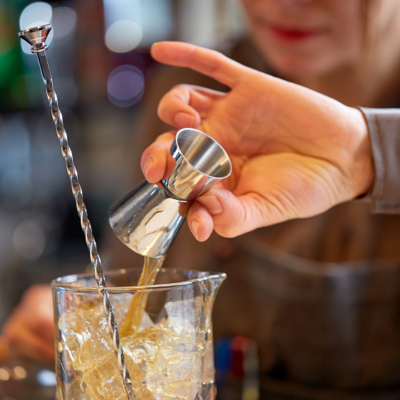
- Measured Pour Requirement: Utah bartenders are required by law to use a calibrated measuring device to ensure spirit pours are exactly 1.5 ounces the only state in the country that mandates measured pours by statute.
- Zero-Tolerance Underage: Utah has a ‘not-a-drop’ zero-tolerance law for drivers under 21 any detectable level of alcohol constitutes a DUI for underage drivers.
- Consumption Impact: Per capita alcohol consumption in Utah is the lowest of any U.S. state, at approximately 1.23 — 1.34 gallons of ethanol per person per year less than one-third of New Hampshire’s rate.
Other Notable Restrictive States
Beyond Utah, several states maintain specific alcohol regulations that make them notably strict in particular dimensions:
- Pennsylvania — Pennsylvania: Wine and spirits sold exclusively through state-run PLCB (Pennsylvania Liquor Control Board) stores. Chain grocery and convenience stores face significant restrictions on beer and wine sales. Widely cited as one of the most restrictive distribution models in the country.
- Kansas — Kansas: Was the last U.S. state to repeal Prohibition, not doing so until 1948. Numerous dry counties remain today. Significant restrictions on Sunday sales persist in many jurisdictions.
- Mississippi — Mississippi: Many counties remain fully dry and alcohol sales are banned outright. Liquor and wine available only in state-licensed stores in wet jurisdictions.
- North Carolina — North Carolina: Happy hour promotions including ‘buy one get one free’ offers are completely prohibited. Mandatory alcohol server training required. Tight restrictions on license quantities.
- Massachusetts — Massachusetts: Among the first states to ban happy hour (1984). Significant restrictions on drink specials, drinking games, and supermarket alcohol sales hours.
What Is the Drunkest State? Per Capita Alcohol Consumption by State
The answer depends on which metric you use. Per capita alcohol consumption data based on beverage sales figures relative to population is compiled annually by the National Institute on Alcohol Abuse and Alcoholism (NIAAA). Excessive drinking rates, defined by the CDC as binge drinking (4+ drinks per occasion for women, 5+ for men) or heavy drinking (8+ drinks per week for women, 15+ for men), are tracked separately and tell a somewhat different story.
Highest Per Capita Alcohol Consumption (NIAAA Data, 2022)
According to NIAAA Surveillance Report #121 (published April 2024), covering data through 2022, the top states by per capita ethanol consumption are:
|
Rank |
State |
Per Capita (Ethanol) |
Context |
|
1 |
New Hampshire |
4.76 gal |
Tax-free alcohol sales attract cross-border purchases from neighboring states (MA, VT, ME), significantly inflating per capita figures. Not a true reflection of resident drinking habits alone. |
|
2 |
Washington D.C. |
4.1 gal |
High tourist concentration and entertainment economy. Cross-border purchasing patterns from MD and VA inflate figures. |
|
3 |
Delaware |
4.07 gal |
No alcohol sales tax. Cross-border shopping from PA, MD, and NJ inflates figures substantially. |
|
4 |
Nevada |
3.42 gal |
Las Vegas and resort tourism. High volume of tourist alcohol consumption recorded in state sales data. |
|
5 |
Wisconsin |
2.98 gal |
Strong Midwestern drinking culture. Beer is particularly embedded in social and historical tradition. No major cross-border inflation factor. |
|
6 |
Montana |
~2.8 gal |
High excessive drinking rate (26% of adults per CDC) and strong alcohol culture in rural communities. |
|
50 (Lowest) |
Utah |
1.23–1.34 gal |
Strict alcohol laws and LDS religious influence produce the lowest consumption rate in the nation by a wide margin. |
An important methodological caveat: states like New Hampshire, Delaware, and Washington D.C. rank high largely because of cross-border alcohol purchasing rather than because their residents drink more. Visitors from neighboring states buy alcohol in bulk where taxes are lower or availability is better, and these sales are counted in the originating state’s figures. Wisconsin and Montana, by contrast, represent more genuine high-consumption cultures without significant cross-border inflation.
States with Highest Excessive Drinking Rates (CDC Data)
Per the CDC’s most recent excessive drinking analysis, the states with the highest self-reported rates of excessive drinking among adults are Montana (26%), Washington D.C. (25%), Iowa (25%), and North Dakota (25%). Wisconsin, long associated with the highest excessive drinking rates, dropped to fifth place in the most recent data at 24%.
The connection between excessive drinking rates and alcohol server training requirements is direct and well-documented. States with mandatory RBS programs and robust enforcement tend to show lower rates of alcohol-related incidents and DUI fatalities than states without training requirements reinforcing the public health rationale for the kind of comprehensive program California implemented under AB 1221.
What States Are Zero Tolerance for Alcohol?
The phrase ‘zero tolerance for alcohol’ means different things in different regulatory contexts. It is important to clarify which specific zero-tolerance framework is being referenced, because the answer changes significantly depending on whether you are asking about underage DUI laws, adult DUI laws, or alcohol service regulations.
Zero Tolerance for Underage Drivers: All 50 States
Every single U.S. state has a zero-tolerance law for drivers under the age of 21. Under the National Highway System Designation Act of 1995, states were required to adopt BAC limits of 0.02% or lower for underage drivers or lose federal highway funding. All 50 states and Washington D.C. complied. In practice, most states set the underage limit at 0.01%–0.02%, effectively prohibiting any alcohol consumption before driving. Some states go further:
- Absolute Zero (0.00%): Alaska, Illinois, and Maine: 0.00% BAC any detectable trace of alcohol constitutes a DUI for an underage driver.
- California: California: 0.01% BAC for drivers under 21 under Vehicle Code Section 23136 functionally a not-a-drop law given measurement tolerances.
- Texas: Texas: 0.00% any detectable amount triggers DUI charges for drivers under 21.
- Most States: Approximately 34 states: 0.02% BAC threshold for underage drivers.
Zero Tolerance for Adult Drivers: Only Utah
For adult drivers (age 21 and older), there is no state with an absolute zero-tolerance BAC law alcohol is a legal substance for adults, and no state criminalizes driving with any trace of alcohol in the system for adults without other evidence of impairment. However, Utah comes closest, with a per se DUI limit of 0.05% the lowest adult DUI standard in the nation and far below the 0.08% standard in all other states.
Zero Tolerance in Alcohol Service: The ‘Not a Drop’ Service Context
In the alcohol service context, zero tolerance refers not to BAC levels but to service policies. Several states have adopted zero-tolerance policies for service to minors or visibly intoxicated individuals, imposing mandatory penalties without prosecutorial discretion. California’s Minor Decoy Program and the 72-hour notification law are examples of enforcement frameworks designed to create zero-tolerance outcomes even within a 0.08% adult BAC legal framework.
|
Zero Tolerance Type |
Scope |
Notes |
|
Zero tolerance for underage DUI |
All 50 states (BAC 0.00%–0.02% depending on state) |
Federally mandated since 1995 |
|
Zero tolerance adult DUI (0.05%) |
Utah only |
Only state below the 0.08% federal standard |
|
Standard adult DUI (0.08%) |
49 states + D.C. |
Federally standardized via highway funding leverage (2004) |
|
Enhanced penalty DUI (0.15%+) |
Most states |
‘Aggravated DUI’ charges with harsher penalties |
|
Pre-employment RBS certification required |
Oregon (March 2025 reform) |
Most states allow post-hire training window |
|
Mandatory RBS training for all servers |
~14–17 states |
California, Washington, Oregon, Illinois, others |
Frequently Asked Questions: National RBS Comparison
Do other states have RBS programs like California’s?
Yes, but none are structured exactly like California’s. Approximately 14 to 17 states have statewide mandatory alcohol server training requirements. California’s program is distinguished by its combination of a state-administered exam (50 questions, 70% to pass), a centralized online registry (ABC RBS Portal), a mandatory employer payment obligation under SB 476, and multi-language support for the exam. Oregon’s 2025 reform under House Bill 4138 which now requires certification before serving is the closest peer to California’s framework in terms of structural rigor.
Which states require alcohol server training?
As of 2026, states with clear statewide mandatory training requirements include Alaska, California, Illinois, Indiana, Louisiana, Michigan, Montana, Nevada, Oregon, Rhode Island, Utah, Washington, and Wisconsin, among others. Many additional states have voluntary programs with meaningful incentives. Local jurisdictions in states without statewide laws may impose their own mandatory requirements for example, the city of Boise, Idaho has its own mandatory ordinance.
Does a bartending license work in every state?
No. Alcohol server certifications are state-specific and do not automatically transfer across state lines. Each mandatory-training state has its own approved provider list, its own exam structure, and its own certification registry. Moving from one state to another generally requires completing the new state’s program from scratch. The only partial exceptions are states that accept widely-recognized third-party programs (TIPS, ServSafe Alcohol) as satisfying their training content requirements but even then, a separate state registration may be required.
What is the 1-2-3 rule for alcohol?
The 1-2-3 rule (also called the 0-1-2-3 rule) is a moderation framework from the NIAAA’s low-risk drinking guidelines: 0 drinks in situations where no alcohol is safe (driving, pregnancy, certain medications); 1 standard drink per hour (the approximate rate the liver metabolizes alcohol); no more than 2 standard drinks per day or occasion for most adults; and at least 3 alcohol-free days per week. For servers, the physiological principles behind this framework directly underpin responsible service training explaining why pace, body weight, food consumption, and drink strength all affect intoxication independently of drink count.
Is 2 beers a DUI?
It depends on body weight, sex, drinking pace, food consumption, and which state you are in. Two standard beers over two hours will produce a BAC well below 0.08% for most adult males, but could approach or exceed the legal limit for a smaller adult female consuming the same drinks more quickly. In Utah, where the DUI limit is 0.05%, two beers consumed relatively quickly could legally impair even a larger adult. More importantly, many ‘craft’ beers are 7%–10% ABV, making a single pint equivalent to 1.5–2 standard drinks.
Is RBS training mandatory in California?
Yes, without exception. California RBS training has been mandatory since July 1, 2022 under AB 1221 and AB 82. All on-premises alcohol servers, ID-checkers, and their managers at California ABC-licensed establishments must be certified through the California ABC RBS Portal. New hires have a 60-day grace period. As of January 1, 2024, employers are legally required to pay for training under SB 476.
What is the strictest state for alcohol?
Utah is consistently identified as the strictest state for alcohol regulation in the United States. It is the only state with a per se DUI BAC limit of 0.05% (all other states: 0.08%), requires measured pours by statute, bans happy hour advertising, caps grocery store beer at 5.0% ABV, sells wine and spirits only through state-run stores, and has the lowest per capita alcohol consumption of any state. Pennsylvania, Kansas, Mississippi, North Carolina, and Massachusetts are also frequently cited for their restrictive regulatory frameworks.
What is the drunkest state in the United States?
By per capita alcohol consumption (NIAAA data, 2022), New Hampshire ranks first but this is significantly inflated by cross-border alcohol purchases from neighboring states that have higher taxes. States with genuinely high consumption cultures include Wisconsin, Montana, and North Dakota. By CDC excessive drinking rates, Montana (26% of adults), Washington D.C. (25%), Iowa (25%), and North Dakota (25%) top the rankings. Utah has the lowest per capita consumption of any state.
What states are zero tolerance for alcohol and driving?
All 50 states have zero-tolerance BAC laws for drivers under 21, setting the limit between 0.00% and 0.02% BAC. For adult drivers, Utah is the only state with an adult DUI standard below the federal norm, at 0.05% BAC. Alaska, Illinois, Maine, and Texas are among the states that set the underage BAC threshold at 0.00% making any detectable alcohol illegal for underage drivers regardless of amount.
How does California RBS compare to TIPS certification?
TIPS (Training for Intervention ProcedureS) is a nationally recognized third-party alcohol server training program widely accepted by employers across the country. In California, however, TIPS certification alone does not satisfy the RBS requirement. California requires training from a California ABC-approved provider specifically, followed by registration in the ABC RBS Portal and passing the state-administered 50-question exam. TIPS training may be offered by a California ABC-approved provider, in which case it would satisfy the training component but the state portal registration and exam are always required additionally.
Ready to Get Certified? California's RBS Program Starts Here
Whether you are completing your first certification, renewing before your deadline, or managing compliance for a team, our California ABC-approved RBS training platform gives you the fastest, most streamlined path to certification fully online, mobile-friendly, and with automatic reporting to the ABC RBS Portal so you can access the state exam without delay.
Working in Another State?
If you are a server, bartender, or operator working in Washington, Oregon, Illinois, Texas, Louisiana, or any other state with its own alcohol server training requirement, our platform supports state-specific certification courses for multiple jurisdictions so you can stay compliant wherever you work.
|
Find Alcohol Server Training for Your State Multi-state coverage | Nationally recognized programs | TIPS, BASSET, TABC, MAST, OLCC, and more |
Disclaimer: The information provided in this article is for general informational purposes only and reflects industry practices, regulatory interpretations, and publicly available guidance at the time of writing. It is not intended to constitute legal advice, regulatory advice, or a definitive interpretation of applicable law. Alcohol service laws, licensing requirements, and compliance obligations may vary by jurisdiction and are subject to change. Readers are encouraged to consult qualified legal counsel, regulatory authorities, or appropriate compliance professionals before making operational or legal decisions.