Table of Contents
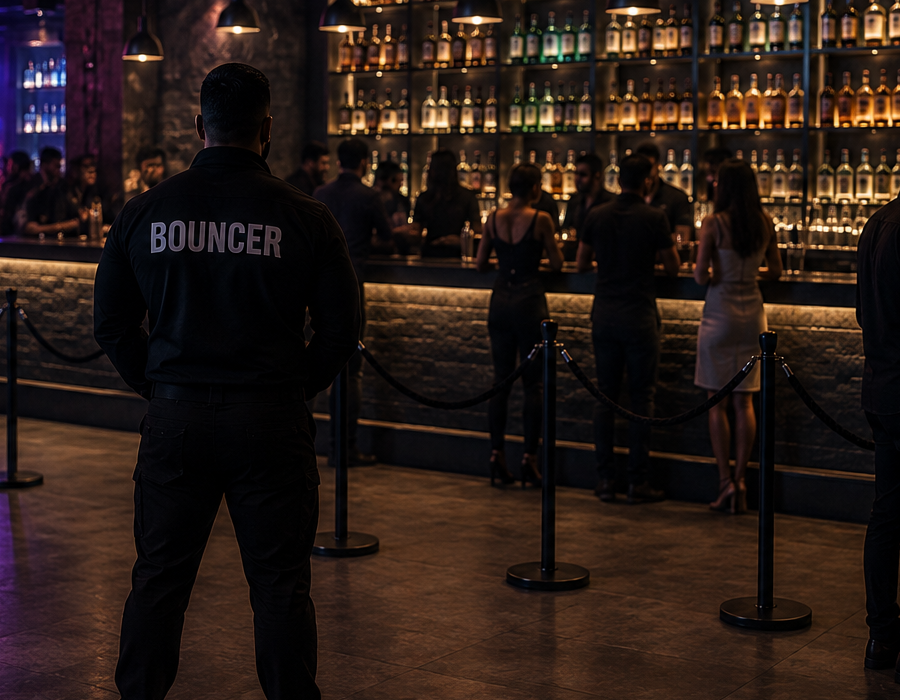
If you run a bar, nightclub, or restaurant in California, you’ve probably trained your bartenders and servers on RBS (Responsible Beverage Service) requirements without a second thought. But what about the bouncer standing at the front door, or the security team walking the floor? Do they need to be RBS certified too?
The answer isn’t a simple yes or no across the board. It depends entirely on what that person is actually doing at your establishment. This guide breaks down exactly how California law applies to bouncers and security staff, why the distinction matters, and how to make sure your whole team, not just your bartenders, is properly covered.
The Law Behind RBS Certification in California
California’s RBS requirement stems from Assembly Bill 1221 and fundamentally changed how the state treats alcohol server training. Before this law, RBS training was simply recommended for staff. That changed on July 1, 2022, when RBS certification became mandatory, and only state-approved training providers were permitted to offer courses that count toward it.
The law defines who counts as an “alcohol server” broadly, and that definition is exactly where bouncers and security staff come into the picture.
So, Do Bouncers Need RBS Certification?
Here’s the key rule directly from California’s regulatory framework. The requirement to be RBS certified applies to any server at a licensed premises, as well as security guards who check IDs at the door of a licensed premises. However, security guards who do not check IDs do not need to be RBS-certified.
In other words, it isn’t the job title “bouncer” or “security guard” that triggers the requirement. It’s the specific duty of checking identification to verify a patron’s age before they enter an area where alcohol is served, or before alcohol is served to them.
This distinction matters because it means two bouncers working at the same venue could have completely different certification obligations depending on their actual assigned duties on a given shift.
When a Bouncer Is Legally Considered an “Alcohol Server”
Under California law, the definition of an alcohol server extends beyond bartenders and waitstaff. Anyone employed at an ABC on-premises licensed establishment who is responsible for checking identification, taking orders, or pouring and delivering alcoholic beverages falls under this category, including bouncers or security staff who are tasked with checking IDs at the door.
This means a bouncer who is:
- Checking IDs for entry into a bar, club, or licensed venue → RBS certification required
- Checking IDs specifically to verify age for alcohol service → RBS certification required
- Monitoring patrons for signs of intoxication as part of their duties → typically RBS certification required, since this role overlaps with alcohol service oversight
- Handling only crowd control, with no ID-checking or alcohol-monitoring duties → RBS certification generally not required
The practical takeaway is simple. If any part of a security staff member’s job touches age verification or alcohol service oversight, California treats them the same as a bartender or server for certification purposes.
Why This Rule Exists: Bouncers Play a Bigger Role Than You Might Think
It might seem unusual to lump bouncers in with bartenders when it comes to training requirements, but the logic makes sense once you consider what bouncers actually do at most licensed venues. They’re often the very first point of contact for a patron entering the building, and in many cases, they’re the last line of defense against underage entry or an already-intoxicated guest walking through the door.
Bouncers and door staff typically:
- Check identification to verify legal drinking age
- Assess a patron’s condition before granting entry
- Monitor the floor for signs of intoxication or escalating behavior
- Remove or refuse entry to disruptive or visibly intoxicated individuals
Each of these responsibilities directly overlaps with the core goals of RBS training. Preventing underage service, spotting fake identification, recognizing early signs of intoxication, and knowing how to de-escalate a tense situation without making it worse. A bouncer without this training is left to rely on instinct alone in situations where the law and your liability exposure expect a trained response.
What Happens If You Get This Wrong
Skipping certification for security staff who check IDs isn’t a minor oversight. It’s a direct compliance gap that can expose your business in a few different ways:
Regulatory risk. California ABC enforcement doesn’t distinguish between bartenders and bouncers as to who’s legally required to be certified. If your door staff checks IDs without RBS certification, your establishment is out of compliance, which can lead to citations or penalties during an ABC inspection.
Liability exposure. If an uncertified bouncer lets in a minor, or fails to catch the early signs of intoxication in someone who later causes harm, your business could face liability under California’s dram shop framework, the same exposure that applies to over-service by a bartender.
Insurance complications. Liquor liability insurers increasingly expect that all alcohol-facing staff, not just those pouring drinks, are properly trained. A gap in your door staff’s certification can complicate claims or affect how insurers assess your overall risk profile.
Staffing disruptions. If an ABC audit reveals uncertified security staff performing ID checks, you may need to pull them from that role immediately, leaving your venue short-staffed at the door until certification is completed.
Practical Steps: How to Handle RBS Certification for Your Security Team
If you manage a bar, club, or restaurant with security or door staff, here’s how to stay compliant:
- Define the role clearly. Determine exactly whether each security team member’s duties include checking IDs or monitoring alcohol-related behavior. Don’t assume document it.
- Certify anyone whose duties touch ID checks or alcohol monitoring. If there’s any ambiguity about whether a role qualifies, the safer approach is to certify that employee rather than risk a compliance gap.
- Apply the same 60-day rule you use for servers. New hires, including bouncers and security staff, have a limited window from their start date to complete RBS certification. Build this into your onboarding checklist the same way you would for a new bartender.
- Keep certification records on file and verifiable. California ABC allows employers to check certification status directly through the ABC RBS Portal. Make this part of your regular compliance review, not just a one-time hiring step.
- Choose a state-approved provider for your entire team. Whether you’re certifying bartenders, servers, managers, or security staff, the training needs to come from an ABC-approved provider to count toward legal compliance.
Getting Your Whole Team Certified — Bouncers Included
This is where a dedicated training partner makes a real difference. Serving Alcohol offers ABC-approved RBS certification designed for everyone on your team who interacts with alcohol service, not just the people behind the bar. The course covers ID verification, recognizing intoxication, de-escalation, and California-specific compliance requirements, all delivered in a short, self-paced online format that doesn’t require pulling staff off shift for a full day of training.
Since RBS certification applies to bouncers and security staff the moment ID-checking or alcohol monitoring becomes part of their job, it makes sense to build certification into how you staff and train your entire door and floor team, not just your service staff.
Final Thoughts
The rule is more straightforward than it first appears. It’s not the job title that determines whether a bouncer needs RBS certification in California. It’s the duty of service. If a security team member checks IDs or monitor alcohol-related behavior, California law treats them as an alcohol server, with the same certification requirement as your bartenders and waitstaff.
Getting this right protects your business on three fronts at once regulatory compliance, liability exposure, and insurance standing. And it’s a straightforward fix through Serving Alcohol. Your entire staff from bartenders to door security can get properly certified quickly, keeping your venue compliant from the front door to the back bar.
Disclaimer: This article is for general informational purposes only and does not constitute legal advice. RBS certification requirements can depend on specific job duties and may be subject to change. Always confirm current requirements directly through the California ABC RBS Portal or consult a qualified attorney for guidance specific to your business.